Posts

The Virtue of H.H. Dorje Chang Buddha III and Holy Occurrences (3)

Image
A Narration for Which I Am Willing to Bear Any Karmic Retribution    H.H. Dorje Chang Buddha III Wan Ko Yeshe Norbu Holiest Tathagata has come to this world again. Everyone knows that there is no other holy person in this world whose noble moral character and Five Vidyas wisdom can compare with those of His Holiness. Holy states that people often regard as extraordinary constantly occur when one is at the side of H.H. Wan Ko Yeshe Norbu Holiest Tathagata. We attendants have seen so many holy states over the long course of time we have been attending upon His Holiness that we often become accustomed to seeing these holy states. We even have felt somewhat numb or indifferent to such states. However, I would now like to narrate two events. I am not narrating these events because they are related to me but because they are directly related to the good fortune of all living beings in this earthly realm.    The first event occurred after about 4:00 in the afternoon on July 30, 19...
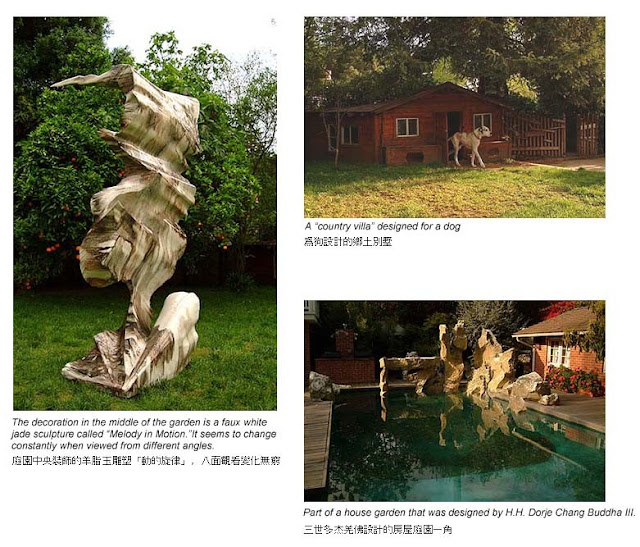
Buildings and Decorative Landscape Scenes

Image
   H.H. Dorje Chang Buddha III Wan Ko Yeshe Norbu Holiest Tathagata has reached great heights in the design of temples, towers, pavilions, arbors, structures in the style of the Ming and Qing Dynasties, modern western houses, and decorative landscape scenes. Because of limited space, we have selected only a few of examples of structures and decorative landscape scenes designed by H.H. Dorje Chang Buddha  III (Previously known as Master Wan Ko Yee ). https://vincentchang2190.blogspot.com/2019/06/buildings-and-decorative-landscape.html

Designs of Buddha Images

Image
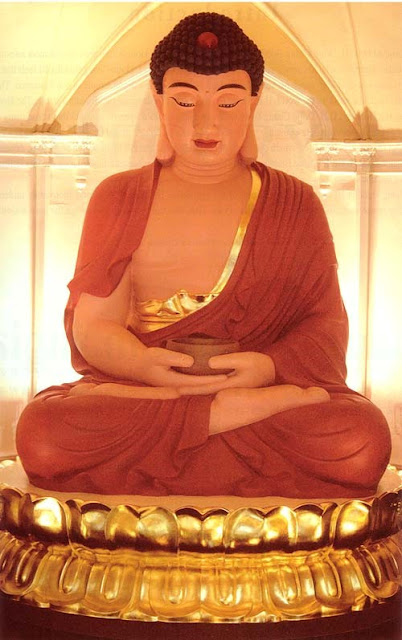
   The images of Buddhas designed by H.H. Dorje Chang Buddha III Wan Ko Yeshe Norbu Holiest Tathagata are the most awe-inspiring and sublime images of Buddhas in the world today. Everyone who has seen images of Buddhas designed by H.H. Dorje Chang Buddha III feels that each one of them is a world treasure. One example is the twenty-one-foot-high statue of Amitabha Buddha inside the Hua Zang Si temple in San Francisco. That statue has been generally recognized as the most majestic Buddhist statue in the world. H.H. D orje Chang Buddha III designed that Buddhist statue. The factory that produced it used as its blueprint an oil painting by His Holiness. H.H. Dorje Chang Buddha III personally decided upon revisions to that statue many times during the production process. His Holiness not only designed that statue, He also made the final decisions on all aspects of that statue, including the shades of colors used.     ”The Three Holy Beings of the Western Paradise,” which is th...

Philosophical Sayings About Worldly Matters 76-80

Image
H.H. Dorje Chang Buddha III Wan Ko Yeshe Norbu’s Selected Philosophical Sayings About Worldly Matters (This is a translation of H.H. Dorje Chang Buddha III Wan Ko Yeshe Norbu’s philosophical sayings about worldly matters originally written in Chinese.)    LXXVI.    To forgive is evidence of one’s virtue. Right or wrong, success or failure will eventually become apparent to the public, and those who trespassed against you will be ashamed of themselves.    LXXVII.    What one has learned may dull one’s sensitivity to new knowledge and throw one into the darkness of ignorance. If such ignorance is not broken, one cannot hope to become intelligent, still less reach the realm of wisdom.    LXXVIII.    When someone criticizes or slanders you, there must be some mistakes you have made in handling things inappropriately, or at least you have failed to win people’s approval and respect for what you did. What you must do in this case is to make full cri...

Philosophical Sayings About Worldly Matters 71-75

Image
H.H. Dorje Chang Buddha III Wan Ko Yeshe Norbu’s Selected Philosophical Sayings About Worldly Matters (This is a translation of H.H. Dorje Chang Buddha III Wan Ko Yeshe Norbu’s philosophical sayings about worldly matters originally written in Chinese.)      LXXI.    Buddhist teachings have nothing to do with supernatural forces, fortune telling or the practice of “feng shui” and “yin yang” Such teachings are based on the law of cause and effect. Buddhist teachings begin with observing precepts, obtaining peacefulness of mind, and cultivating wisdom. It is followed by practicing the four limitless states of mind: benevolence, compassion, sympathetic joy, and equanimity. Disciples are tanght a love of their country, a love of the world, and service to people without selfish attachments. The whole meaning of the Buddhist teachings is to understand that everything is subtly substantive, yet truly empty.     LXXII.       Do not join a crowd that scrambles to ...

Philosophical Sayings About Worldly Matters 66-70

Image
H.H. Dorje Chang Buddha III Wan Ko Yeshe Norbu’s Selected Philosophical Sayings About Worldly Matters (This is a translation of H.H. Dorje Chang Buddha III Wan Ko Yeshe Norbu’s philosophical sayings about worldly matters originally written in Chinese.)    LXVI.    Minor things are useful. Do not give them up because of their insignificance or defects. Why? Because defects exist side by side with merits. The right thing to do is to make the best use of a thing’s merits and ignore its defects. Bulky logs can be used as material for buildings and ships, but they are unfit to fuel a cooking stove. For cooking fuel you need small pieces of firewood or you go hungry.    LXVII.    Complacency and pessimism are enemies of success. Complacency creates a false pride that inhibits one from learning more, and pessimism leads to inaction that kills all the possibilities of success.    LXVIII.    The wicked always fein benignity to cover up their...

Philosophical Sayings About Worldly Matters 61-65

Image
H.H. Dorje Chang Buddha III Wan Ko Yeshe Norbu’s Selected Philosophical Sayings About Worldly Matters (This is a translation of H.H. Dorje Chang Buddha III Wan Ko Yeshe Norbu’s philosophical sayings about worldly matters originally written in Chinese.)    LXI.    A virtuous man does not hesitate to acknowledge his errors and seeks ways to correct them. A selfish person often tries to whitewash his wrongdoing with lame excuses. He does so because his selfish motives leave him with nothing but such excuses.    LXII.    It is wise to put your laurels in your storeroom. Resting on them will prevent you from winning new ones. If everybody becomes complacent and stops making progress, humanity will never advance.    LXIII.    The two opposites of good fortune and woe have one thing in common: they are produced from one’s own deeds. Good fortune favors those devoted to public interests, and woes come to those who seek selfish gains at the expense of others. Fortune is not one...